

Philodendron (Climbing Varieties) Care Guide.
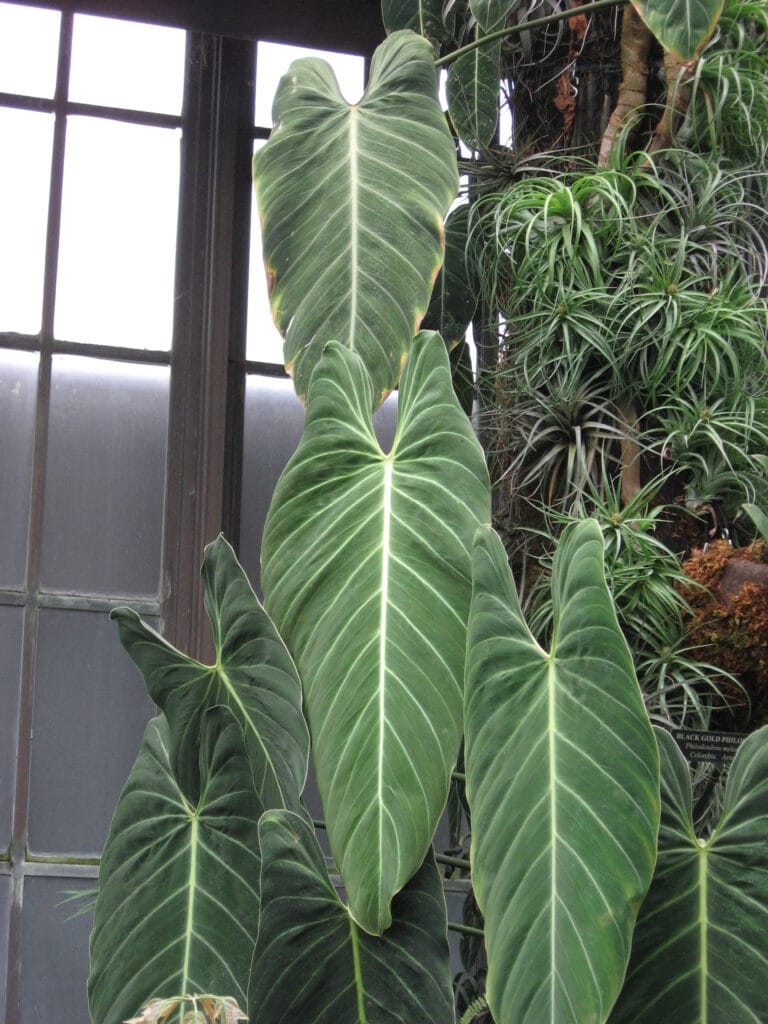
Climbing philodendrons are hemiepiphytic aroids that naturally grow up trees in tropical rainforests. As houseplants, they thrive when given a moss pole or coir totem to climb — mature leaves are significantly larger and more impressive than juvenile ones. This guide covers melanochrysum, Florida Beauty, Orange Princess, and similar climbing species and hybrids.
Light
Bright indirect light produces the fastest growth and best variegation expression. These plants tolerate medium light but will grow slowly and produce smaller leaves. Avoid harsh direct afternoon sun. A north-facing window paired with a grow light is a reliable setup.
Watering
Water when the top inch of soil is dry. Climbing philodendrons are fairly forgiving — they tolerate slight dryness better than overwatering. Root rot from consistently wet soil is the most common cause of decline. Ensure pots have drainage.
Humidity
Aim for 60% or above. melanochrysum in particular has velvety leaves that appreciate higher humidity. Most will adapt to 50% in a pinch, but growth is noticeably better at 65%+. A humidifier is the most effective solution in dry climates.
Support & Training
Provide a moss pole, coir totem, or wooden plank to climb. As the plant attaches its aerial roots and climbs, the leaves mature and become dramatically larger. Without support, climbing philodendrons will stay juvenile indefinitely.
Soil & Potting
A chunky, well-draining aroid mix is ideal — bark, perlite, and coco coir in roughly equal parts. Repot every 1–2 years in spring. These plants appreciate slightly snug pots; too large a pot increases the risk of root rot.
Fertilizing
Feed monthly during spring and summer with a balanced liquid fertilizer at half strength. Reduce to every 6–8 weeks in fall, and withhold in winter unless the plant is actively growing under artificial light.
Temperature
65–80°F is ideal. Protect from drafts and temperatures below 55°F. Warm, stable temperatures encourage faster growth.
Toxicity
All philodendrons contain calcium oxalate crystals and are toxic to pets and humans if ingested.
Care Guide Discussion
I encourage all constructive feedback on my care guides. Feel free to start a discussion or leave a correction you may have found.
No comments yet. Be the first to join the discussion!
Quick Care Guide
- Plant FamilyPiperaceae
- OriginTropical South America
- Mature Size6–12 inches
- LightBright Indirect
- WaterAllow top inch to dry
- HumidityModerate (40–60%)
- Temperature65–80°F
- ToxicityNon-Toxic
- Care LevelBeginner
Shop This Care Guide

Author

Leave a Comment