
Anthurium Veitchii Care Guide.
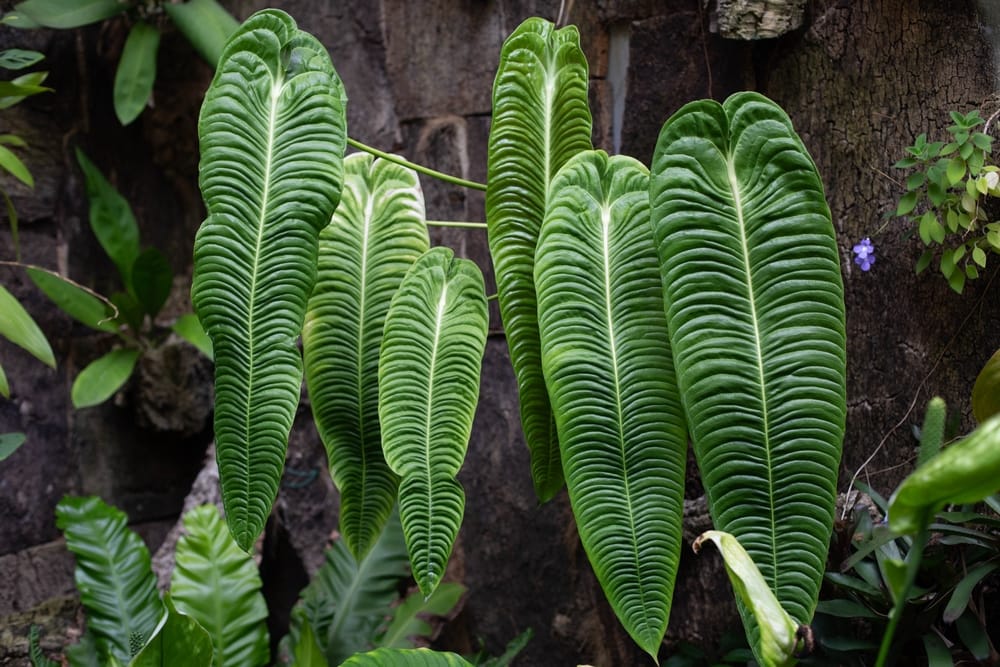
The Anthurium veitchii, commonly known as the King Anthurium, is a spectacular tropical plant celebrated for its extraordinarily long, corrugated leaves that can reach several feet in length under ideal conditions. Native to the rainforests of Colombia, this epiphytic member of the Araceae family grows on tree trunks and branches in the wild, absorbing moisture and nutrients from the humid air and organic debris. The deeply rippled, lance-shaped foliage has an almost prehistoric appearance, with prominent veins creating a dramatic quilted texture that sets it apart from nearly every other houseplant. While the King Anthurium demands a bit more care and environmental control than beginner-friendly plants, its majestic foliage makes it a prized trophy plant for collectors and aroid enthusiasts alike.
Light
Anthurium veitchii thrives in bright, indirect light that mimics the dappled sunlight filtering through the rainforest canopy. An east-facing window or a spot a few feet back from a south- or west-facing window with a sheer curtain is ideal. While this plant can tolerate moderate light levels, insufficient light will result in slower growth, smaller leaves, and less pronounced corrugation. Avoid placing the King Anthurium in direct sunlight, as the large, thin leaves are highly susceptible to scorching, which will appear as bleached or brown patches on the foliage. If your space lacks adequate natural light, a full-spectrum grow light positioned above the plant for ten to twelve hours a day can be a highly effective substitute and will support healthy leaf development year-round.
Watering
Water your Anthurium veitchii when the top inch of the potting mix has dried out. As an epiphyte, this plant is accustomed to cycles of moisture followed by quick drying, so it is important to avoid keeping the roots constantly wet. During the spring and summer growing season, you may find yourself watering roughly once a week, though this will depend heavily on your home’s humidity, temperature, and the type of potting medium used. In autumn and winter, when growth slows, reduce watering frequency and allow the mix to dry slightly more between waterings. Always water thoroughly until it drains from the bottom of the pot, and empty any saucers promptly so the roots are never sitting in standing water. Overwatering is the most common cause of root rot in anthuriums, so when in doubt, it is better to wait an extra day before watering. Using room-temperature filtered or rainwater is ideal, as this species can be sensitive to the chlorine and minerals found in hard tap water.
Soil
Because Anthurium veitchii is an epiphyte, it requires an exceptionally well-draining, airy potting mix that mimics the loose organic matter it clings to in the wild. A blend of orchid bark, perlite, sphagnum moss, and a small amount of horticultural charcoal creates an ideal growing medium that retains enough moisture to keep the roots hydrated while allowing ample airflow around them. Avoid using standard potting soil on its own, as it will compact over time and retain too much moisture, suffocating the roots and inviting rot. Some growers opt to mount the King Anthurium on a wooden board or in a hanging basket lined with sphagnum moss, which closely replicates its natural epiphytic growing habit and provides excellent drainage. Whichever method you choose, the goal is to keep the roots slightly moist but never soggy, with plenty of oxygen available at all times. A slightly acidic to neutral pH of around 5.5 to 6.5 is ideal for nutrient uptake.
Humidity & Temperature
High humidity is arguably the single most important factor in successfully growing Anthurium veitchii indoors. This plant hails from cloud forests where humidity regularly exceeds 70%, and it performs best when household humidity is maintained at 60% or higher. In dry environments, the leaves may develop brown, crispy edges or fail to unfurl properly, resulting in stunted and deformed growth. A humidifier running near the plant is the most reliable way to maintain consistently high moisture levels in the air, though grouping it with other tropical plants or placing it in a naturally humid room like a bathroom with good light can also help. The ideal temperature range for the King Anthurium is 65°F to 80°F (18°C to 27°C). It does not tolerate cold well and should never be exposed to temperatures below 55°F (13°C), as cold stress can cause permanent leaf damage. Keep the plant away from cold drafts, heating vents, and air conditioning units, all of which can create sudden temperature fluctuations that stress the foliage.
Fertilizing
Feed your Anthurium veitchii with a balanced, water-soluble fertilizer diluted to one-quarter to one-half strength every two to four weeks during the active growing season from spring through early autumn. A gentle formula such as 20-20-20 or a fertilizer specifically formulated for aroids or orchids works well, as these tend to provide the right nutrient balance without being too harsh on the sensitive epiphytic roots. Avoid fertilizing during the winter months when growth naturally slows, as excess nutrients can build up in the potting medium and cause fertilizer burn, which shows as brown leaf tips and edges. Always water the plant lightly before applying liquid fertilizer to protect the roots from direct contact with concentrated nutrients. If you prefer a lower-maintenance approach, a slow-release granular fertilizer applied at the beginning of the growing season can provide steady nutrition over several months.
Repotting
Repot your Anthurium veitchii every one to two years, or whenever you notice roots growing out of the drainage holes or circling tightly within the pot. Choose a container that is only one to two inches larger in diameter than the current one, as an oversized pot will hold excess moisture and increase the risk of root rot. Spring is the best time to repot, since the plant is entering its active growth phase and will recover more quickly from the disturbance. Use fresh aroid or epiphytic mix when repotting to replenish nutrients and restore the open, airy structure of the medium. Be gentle with the roots during the process, untangling them carefully and removing any mushy or blackened roots before placing the plant in its new pot. If your King Anthurium is mounted rather than potted, refresh the sphagnum moss surrounding the roots when it begins to break down and decompose, typically once a year.
Pruning & Support
Anthurium veitchii is a naturally pendulous grower whose long, dramatic leaves hang downward, so it is often displayed in a hanging basket or elevated planter where the foliage can cascade freely. Unlike climbing philodendrons, the King Anthurium does not require a moss pole, though providing a sturdy support for the main stem can help keep the plant upright and stable as it matures. Pruning needs are minimal — simply remove any yellowed, damaged, or spent leaves by cutting them at the base of the petiole with clean, sharp scissors or pruning shears. Removing old leaves helps redirect the plant’s energy toward producing new, healthy growth. The plant will occasionally produce small, inconspicuous flower spathes that are far less showy than those of other anthuriums; these can be left on or removed depending on your preference, though removing them allows the plant to focus its resources on leaf production. Wear gloves when handling, as the sap can cause mild skin irritation.
Common Problems
Yellow leaves are typically a sign of overwatering or poor drainage; check the moisture level of your potting mix and adjust your watering routine accordingly. Brown, crispy leaf edges almost always indicate insufficient humidity — increase humidity levels with a humidifier or pebble tray and ensure consistent watering. Leaves that fail to unfurl or emerge deformed usually point to low humidity or inconsistent environmental conditions during the critical unfurling stage. Pests such as spider mites, mealybugs, thrips, and scale can target the King Anthurium, so inspect the foliage regularly, paying close attention to the undersides of the leaves and the leaf bases, and treat any infestations promptly with neem oil or insecticidal soap. Root rot is caused by consistently waterlogged potting media; if caught early, the plant can often be saved by trimming away affected roots and repotting in fresh, well-draining mix.
Toxicity
Like all members of the Araceae family, Anthurium veitchii is toxic to both pets and humans if ingested. The plant contains calcium oxalate crystals, which can cause oral irritation, excessive drooling, vomiting, difficulty swallowing, and swelling of the mouth and throat. Keep this plant well out of reach of cats, dogs, and young children, and always wash your hands thoroughly after handling the leaves, stems, or roots, especially after pruning or repotting.
Care Guide Discussion
I encourage all constructive feedback on my care guides. Feel free to start a discussion or leave a correction you may have found.
No comments yet. Be the first to join the discussion!
Quick Care Guide
- Plant FamilyPiperaceae
- OriginTropical South America
- Mature Size6–12 inches
- LightBright Indirect
- WaterAllow top inch to dry
- HumidityModerate (40–60%)
- Temperature65–80°F
- ToxicityNon-Toxic
- Care LevelBeginner
Shop This Care Guide
Author

Leave a Comment