

Peperomia Metallica Care Guide.
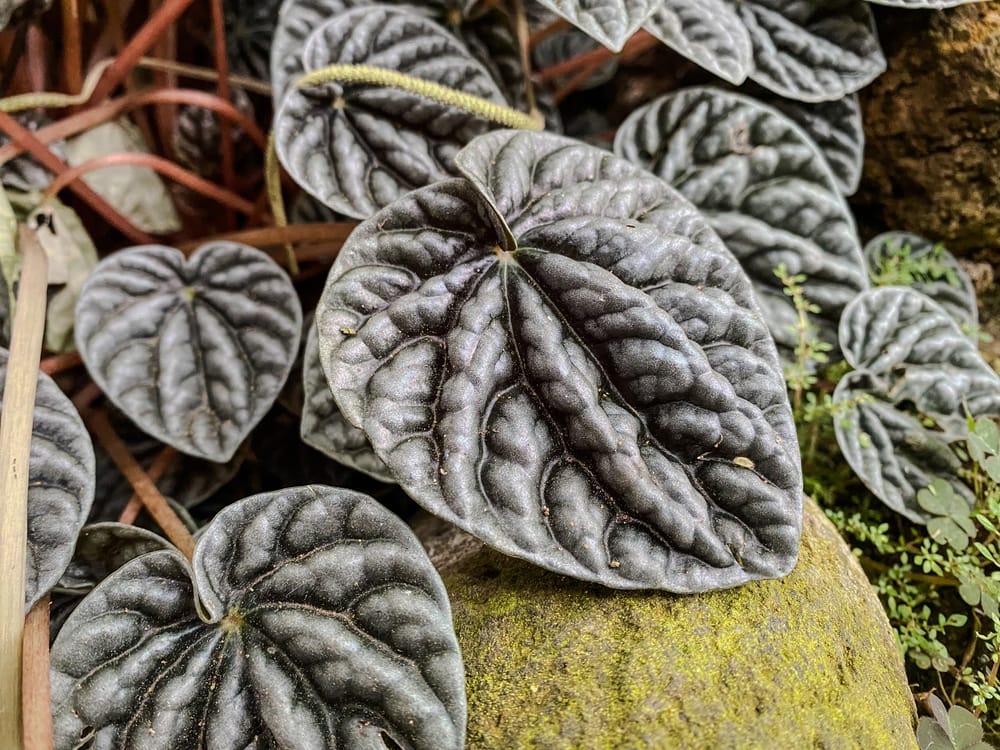
Peperomia metallica is a striking compact houseplant prized for its deep burgundy-to-near-black foliage with a distinctive metallic silver stripe running along the midrib. Native to the tropical rainforests of Peru and Ecuador, this petite beauty belongs to the large and diverse Piperaceae family — a group known for their remarkable variety of leaf shapes, textures, and colors. Easy to care for and slow-growing, Peperomia metallica is an ideal choice for beginners and collectors alike.
Light
Peperomia metallica thrives in bright indirect light. Place it near a north- or east-facing window where it receives plenty of ambient light without direct sun hitting its leaves. Too much direct sun can scorch the foliage and fade the rich dark color, while too little light will cause the plant to become leggy and lose the brilliance of its metallic sheen. It also adapts reasonably well to artificial grow lights, making it a versatile option for offices and rooms with limited natural light.
Watering
Allow the top inch of soil to dry out between waterings. Peperomias store water in their thick, succulent-like leaves, so they are far more tolerant of underwatering than overwatering. Water thoroughly, letting excess drain freely from the pot, then wait until the top inch of the potting mix feels dry before watering again. In winter, reduce watering frequency as the plant’s growth slows. Root rot from overwatering is the most common cause of decline in Peperomia metallica, so always err on the side of slightly dry rather than consistently wet.
Humidity
Peperomia metallica prefers moderate humidity levels between 40–60%, which aligns comfortably with typical indoor environments. It does not require the high humidity demanded by many tropical plants, though it will appreciate a slight boost during dry winter months. Avoid placing it near heating vents, air conditioners, or cold drafts, as extremes of dry air or sudden temperature changes can stress the plant. In particularly dry homes, placing the pot on a pebble tray with water or grouping it with other plants can help maintain adequate humidity without the need for a humidifier.
Temperature
This plant grows happily in temperatures between 65–80°F (18–27°C), making it well-suited to standard home temperatures year-round. It is not frost-hardy and should never be exposed to temperatures below 50°F (10°C). Consistent warmth promotes healthy growth, while cold windowsills or chilly drafts can cause leaf drop and root damage. When moving plants outdoors in summer, choose a sheltered, shaded spot and bring them back inside before nighttime temperatures drop in early autumn.
Soil & Potting
A well-draining, slightly loose potting mix is ideal for Peperomia metallica. A standard indoor potting mix amended with perlite or coarse sand works very well — aim for a ratio of roughly two parts potting soil to one part perlite. This ensures the roots get the air circulation and drainage they need to stay healthy. Avoid heavy, moisture-retaining mixes that can smother the roots. Choose a small pot with drainage holes; Peperomias do not mind being slightly root-bound and actually thrive in snug containers.
Fertilizing
Feed Peperomia metallica once a month during the active growing season (spring and summer) with a balanced, diluted liquid fertilizer at half the recommended strength. Over-fertilizing can cause salt buildup in the soil and lead to leaf burn or root damage. Do not fertilize in autumn and winter, when the plant’s growth naturally slows. If you notice pale leaves or sluggish growth during the growing season, a light feeding can give it a helpful boost.
Propagation
Peperomia metallica is easy to propagate through stem cuttings or leaf cuttings. For stem cuttings, snip a healthy stem with two or three leaves just below a node, allow the cut end to callous for an hour or two, then place it in moist potting mix or a glass of water. Roots typically develop within three to five weeks. For leaf cuttings, remove a healthy leaf with its petiole (the small stalk attaching the leaf to the stem), insert it into moist soil at a slight angle, and keep it in a warm, bright spot. New growth will emerge from the base of the petiole over several weeks.
Common Problems
The most frequent issue with Peperomia metallica is overwatering, which leads to mushy stems, yellowing leaves, and root rot. If you notice these signs, allow the soil to dry out more thoroughly between waterings and consider repotting into fresh, well-draining mix if the roots are damaged. Leggy, pale growth usually indicates insufficient light — move the plant closer to a brighter window. Leaf drop or shriveling can signal cold stress or sudden drafts. Common pests include fungus gnats (encouraged by overly moist soil), mealybugs, and spider mites; treat with neem oil or insecticidal soap at the first sign of infestation. Leaf curl can be a sign of underwatering or very low humidity.
Related Varieties
Peperomia metallica belongs to a group of dark-leaved, metallic-striped Peperomias sometimes collectively called Black Metallic Peperomias. Close relatives and popular companions include Peperomia caperata ‘Burgundy’, with its deeply ridged, reddish-purple leaves; Peperomia rosso, which features bright red undersides and dark green tops; and Peperomia luna red, another velvety dark variety with iridescent highlights. All share similar care requirements and can be grown together for a striking display of rich, jewel-toned foliage.
Care Guide Discussion
I encourage all constructive feedback on my care guides. Feel free to start a discussion or leave a correction you may have found.
No comments yet. Be the first to join the discussion!



Leave a Comment