

Anthurium (Clarinervium & Relatives) Care Guide.
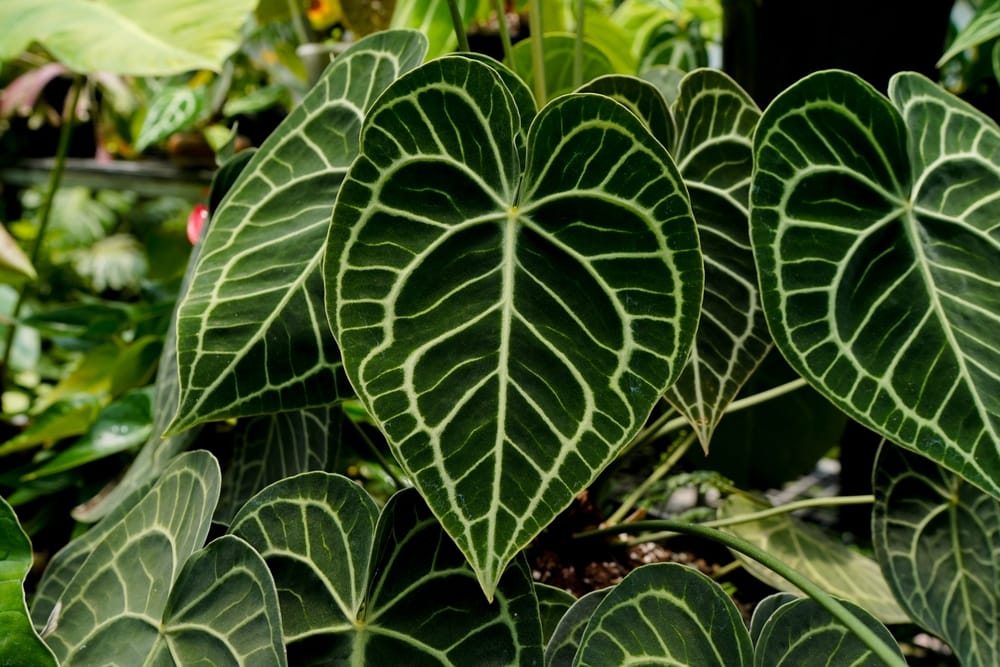
Velvet and strap-leaved anthuriums are among the most sought-after collector aroids. While species like clarinervium, pallidiflorum, and their hybrids have their own quirks, they share a core set of care requirements that make a single guide practical.
Light
Bright indirect light is ideal — a north or east-facing window, or a few feet back from a south/west window. Avoid direct sun, which scorches the velvety leaves. Low light causes slow, leggy growth.
Watering
Water when the top inch of soil feels dry. These anthuriums do not want to stay wet, but they dislike extended drought. Use filtered or room-temperature water when possible; cold tap water can shock the roots.
Humidity
Aim for 60% or above. Leaves will crisp at the tips in dry conditions. A humidifier nearby or a pebble tray works well. Grouping plants together also raises ambient humidity.
Soil & Potting
Use a chunky, well-draining aroid mix — bark, perlite, and a small amount of coco coir or peat works well. These plants are semi-epiphytic and prone to root rot in dense soil. Repot every 1–2 years or when roots begin circling the pot.
Fertilizing
Feed monthly during the growing season (spring through early fall) with a balanced liquid fertilizer diluted to half strength. Reduce or stop feeding in winter.
Temperature
Keep between 65–80°F. Protect from cold drafts and air conditioning vents. Most clarinervium-type anthuriums can tolerate brief dips to 55°F but will stall in growth.
Toxicity
All anthuriums contain calcium oxalate crystals and are toxic to pets and humans if ingested. Keep out of reach of children and animals.
Care Guide Discussion
I encourage all constructive feedback on my care guides. Feel free to start a discussion or leave a correction you may have found.
No comments yet. Be the first to join the discussion!
Quick Care Guide
- Plant FamilyPiperaceae
- OriginTropical South America
- Mature Size6–12 inches
- LightBright Indirect
- WaterAllow top inch to dry
- HumidityModerate (40–60%)
- Temperature65–80°F
- ToxicityNon-Toxic
- Care LevelBeginner
Shop This Care Guide
Author

Leave a Comment